
Interview conducted by Elif Şeyda Doğan
Reaching a wide readership with the Rosalie Blum series and Juliette, Camille Jourdy is an artist whose work has long since crossed the borders of France, focusing less on grand events than on the small fractures that quietly seep into people’s inner lives. In this conversation, we take a close look at Jourdy’s characters, her sense of narrative rhythm, and the intimate relationship she builds with the comics medium.
Camille Jourdy: “A character needs time before they can truly exist.”
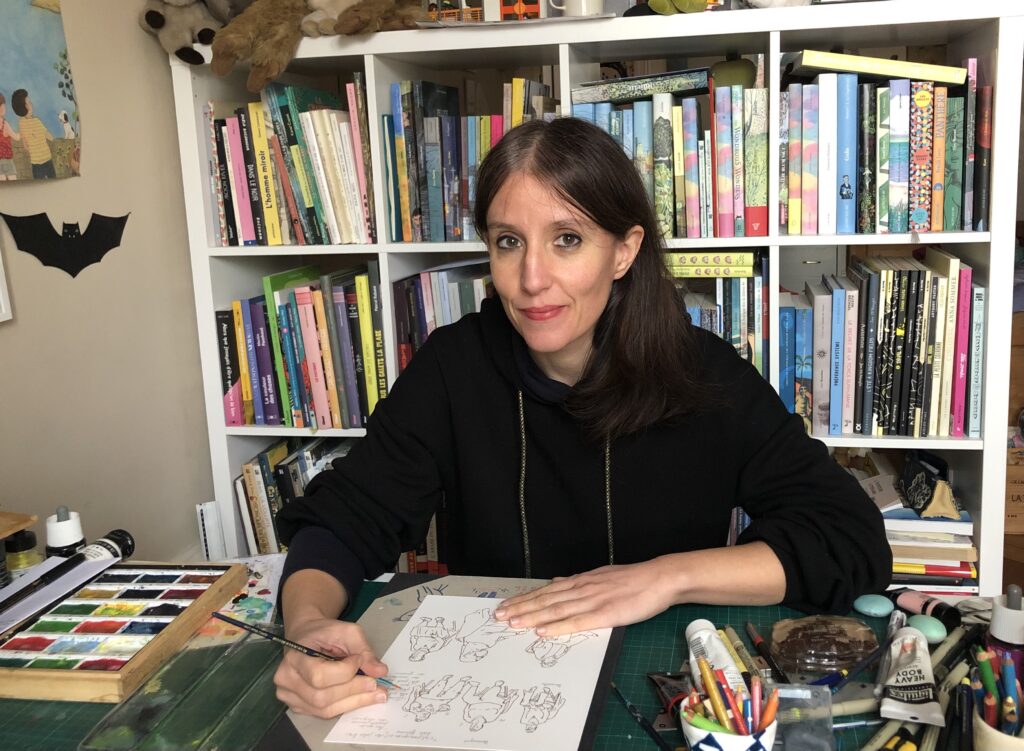
Camille Jourdy
A generous conversation on
attention,
slowness,
and becoming.
Camille Jourdy, in Focus
Born in 1979, French illustrator and comics author Camille Jourdy wrote her first book, Une araignée, des tagliatelles et au lit, tu parles d’une vie!, while studying at the Épinal School of Fine Arts. She later graduated from the Strasbourg School of Decorative Arts in 2005, presenting the first part of Rosalie Blum as her final project.
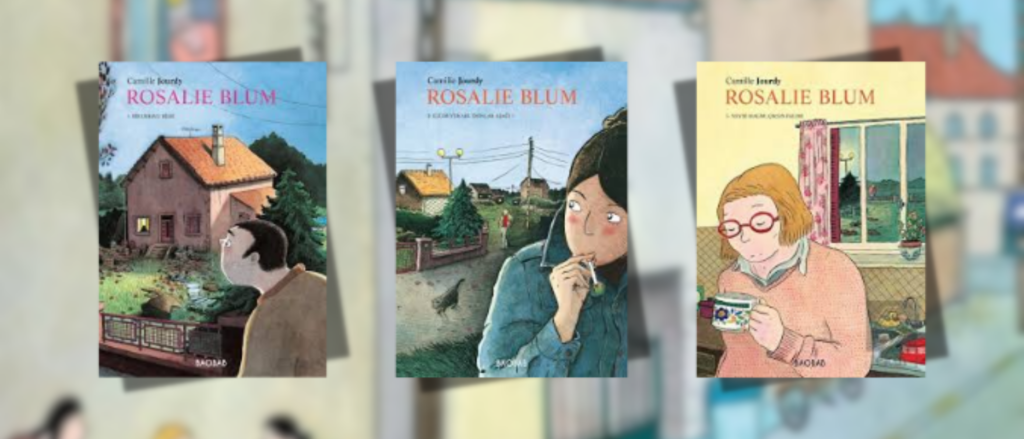
Published in 2009 after four years of work, the Rosalie Blum trilogy received wide acclaim, winning the RTL Comic Book Award (2009) and the Angoulême Discovery Award (2010). In the years that followed, Jourdy also turned toward children’s books. Rosalie Blum was adapted for film in 2016, the same year she returned to graphic novels with Juliette. Her later works include Les Vermeilles, which won the Angoulême Youth Award in 2020, and Cachée ou pas, j’arrive, created with Lolita Séchan, which received a Jury Special Prize at the Bologna Children’s Book Fair.
In comics, readers’ expectations seem more clearly defined in terms of narrative and pacing than in other literary forms. To what extent do you take these expectations into account when you write?
I don’t give much thought to these kinds of questions when I begin working, because comics have long been a natural and deeply internalized form of expression for me. I have always loved drawing and telling stories, and doing so through comics still feels instinctive and spontaneous.
Of course, this doesn’t mean that the process is easy. On the contrary, writing is often demanding and at times even painful. Still, my first concern is to make a comic that speaks to me, that resonates on a personal level. I want to believe that a story that carries meaning for me can also create a response in readers, and that they, too, can find something of themselves within a narrative that emerges from such an intimate place.
The female characters in your stories appear neither idealized nor confined to rigid stereotypes; instead, they come across as fragile, deeply human, and grounded in reality. When you build a character, is “avoiding the male gaze” a conscious concern for you?
No, I wouldn’t say that it’s a conscious concern. When I create female characters, I try to put myself in their place; I often draw on people I know, on situations I encounter in everyday life, and on my own observations.
For a character to truly “come to life,” time is essential. I need to let them speak, move, and exist through drawing before they can slowly begin to take shape. Only then do they stop being figures on the page and start to establish a presence of their own.
For a long time, the comics world was largely dominated by male authors, and I was not always satisfied with the way women were represented in their stories. I often felt that female characters were reduced to something one-dimensional or confined to clichés.
I wanted to create characters that felt more “real,” with their flaws and contradictions, their strengths and weaknesses. But in truth, this concern isn’t limited to female characters alone; whether they are men or women, I try to approach all my characters with the same level of care and attention.
“I observe my characters as if they were actors.”
Ordinary lives are often considered not worth telling. What, in your view, truly makes a story worth telling?
I believe that all stories are worth telling; what truly matters is how they are told. It is entirely possible to start with a very strong idea and still end up with a book that fails to resonate with readers. Conversely, a story built on a very simple premise can become deeply poetic and compelling through the strength of its telling.
For me, the most important thing is that characters truly “take on a body.” It isn’t enough for them to exist within the narrative; they need to feel alive and tangible. That’s why I spend a great deal of time on dialogue, thinking carefully about how they walk, how they stand, and how they react. I observe my characters as if they were actors, trying to understand their movements and gestures.
Staging is also an essential part of this process. This is why I work extensively on the storyboard, repeatedly testing how a scene should be broken down, which framing might be more effective, and how many panels are needed. All of these choices directly shape the rhythm of the story and the emotions I hope to evoke in the reader.
In your stories, characters often struggle to express themselves properly; they remain silent, are misunderstood, or arrive too late. Is the absence of a clear distinction between “good” and “evil” a deliberate moral stance on your part, or is it a space that the narrative opens up on its own?
Most of the characters I create have flaws, yet I always feel a strong sense of empathy and tenderness toward them. Rather than judging them, I try to understand them, because they are shaped not by perfection but by their human qualities.
In real life, no one is perfect either. I am particularly moved by people who carry wounds, who have experienced fractures, or who struggle with a lack of self-confidence. This state of vulnerability reminds me of what is most genuine about being human.
For this reason, my stories often feature wounded characters, or families trying to heal their wounds together. For me, storytelling is less about delivering moral judgments or drawing clear lines between right and wrong than about opening up a space in which these fragilities can exist and be understood.
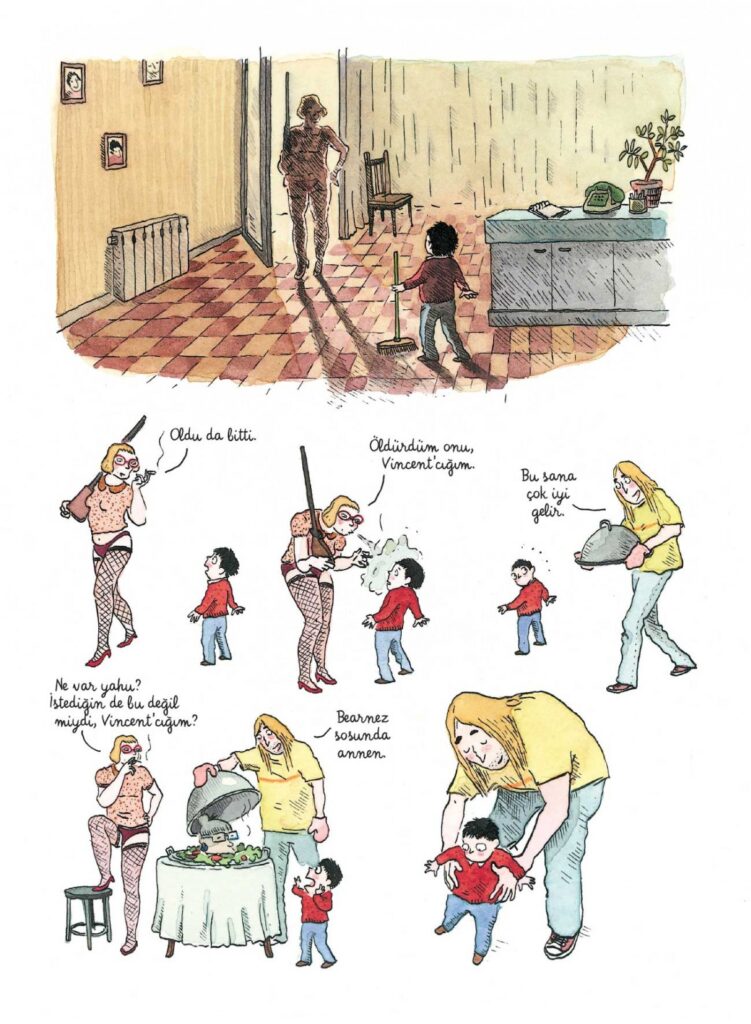
Your readers often say that they recognize themselves in your stories in a way that feels almost “uncomfortably familiar.” How do you experience this sense of closeness, and how would you define the distance you maintain with your readers?
I do receive a great many messages from readers telling me that they have identified with certain characters. This always makes me very happy, because it tells me that the story is working.
At times, the messages I receive are deeply moving; some readers tell me how emotionally affected they were while reading my books.
This kind of feedback motivates me to keep working. Making a comic is a very long and demanding process, and there are inevitably moments of doubt and discouragement along the way. But knowing that someone has found meaning for themselves in the story rekindles my desire to continue.
Flaws, Fragility, and the Bond with Characters
In France, comics are part of a strong historical and institutional tradition. Within this context, how do you position the relationship between editor and author in the creative process?
The role of my editor is truly very important to me. We have been working together for nearly twenty years, which has allowed us to get to know each other very well over time. This sense of trust and familiarity makes the creative process more open and shared for me.
I begin discussing my comics with my editor at Actes Sud, Thomas Gabison, from the very start, when ideas are still taking shape. As the story develops, I regularly send him storyboard pages; we read them together, reflect on them, and talk through what is working and where I may be struggling.
From time to time, we also meet in Paris to talk at length about the book. His outside perspective is extremely valuable to me, because when you work on a book for such a long time, it’s easy to lose a sense of distance. When I feel blocked, I call him, and these conversations help reopen the process for me.
Of course, not everyone works in the same way. Some authors prefer editors not to intervene at all in the creative process. There are many different ways of working in comics, and all of them are possible.
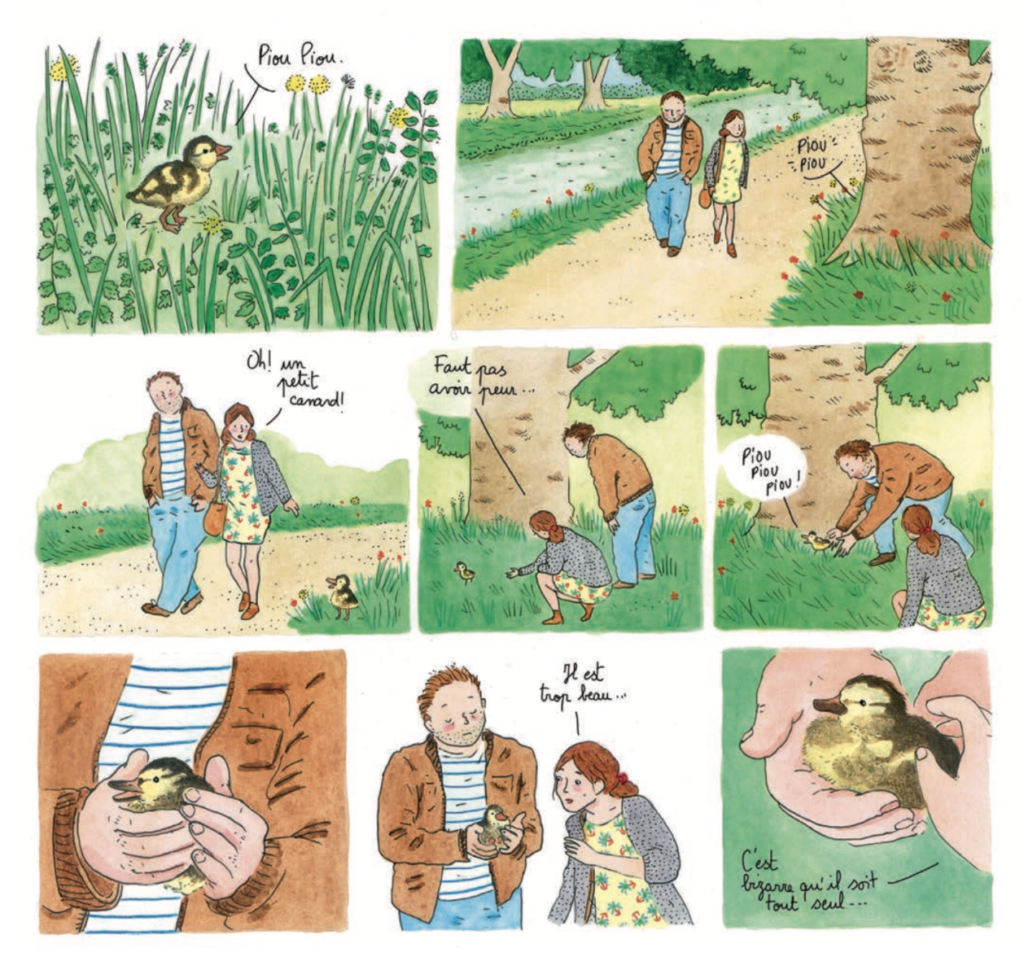
From the perspective of Turkey, comics in France still appear to be strongly tied to the printed format. In an age where fast-consumed digital narratives are increasingly prominent, do you think slower forms of storytelling still have a place today—and will continue to do so in the future? How do you think digitalization might transform these cultural habits?
I honestly don’t know how digitalization will transform all of this; these are questions I ask myself often.
I am very attached to the physical object of the book: the texture of the paper, its smell, the rhythm of turning pages… none of this can really be compared to reading on a tablet. I don’t enjoy reading on a tablet, though this may also be a matter of generation.
Still, I want to believe that digital comics and printed books can coexist. They likely won’t be used in the same way. Some stories may be well suited to fast consumption on a tablet, but I don’t think this can replace a printed book that takes time to unfold its story and invites the reader to linger.
In tablet formats, drawings are often skimmed quickly, without much attention to detail. With a printed book, however, images are approached differently. Some of my readers tell me that after finishing a book, they go back and spend time lingering over the pages, looking more closely at the drawings. The relationship one builds with the story is entirely different.
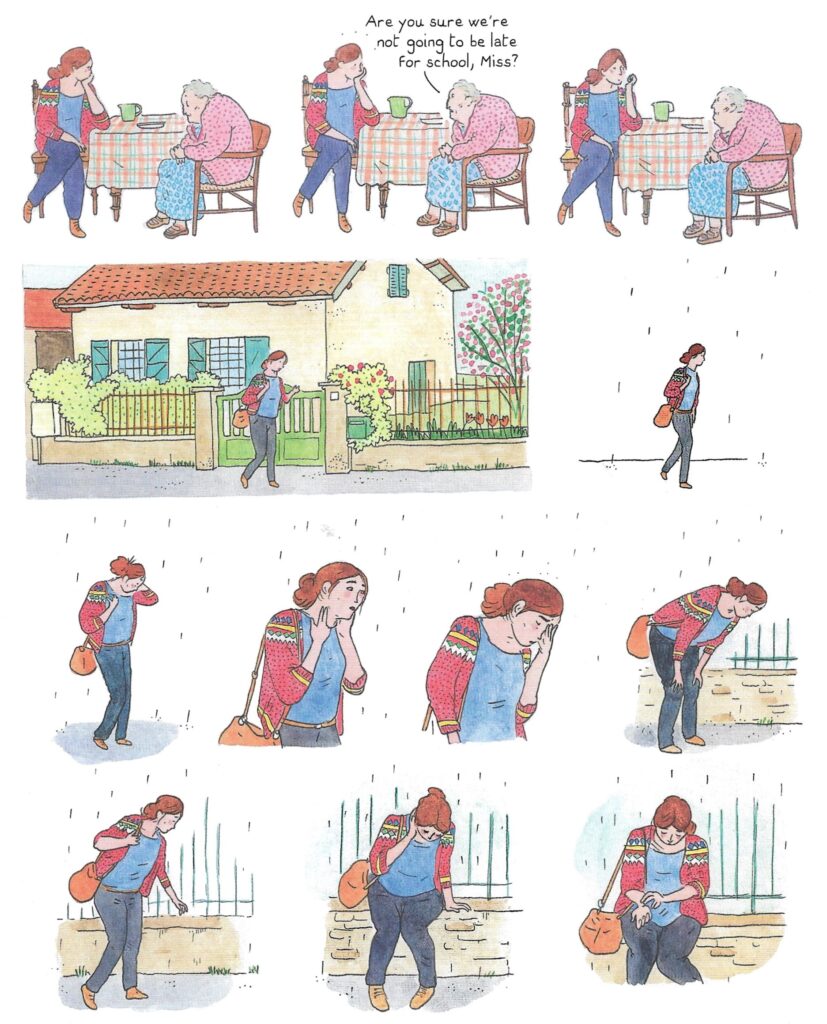
Major festivals such as Angoulême can play a decisive role in the fate of a book. Do you think these institutions open up new paths for authors, or do they place a pressure of visibility that risks overshadowing the stories themselves?
Festivals can indeed shine a light on a book, especially when it receives an award. However, I don’t think they are indispensable.
Some comics can also find their way through word of mouth or thanks to the support of booksellers. This is precisely why independent bookshops play such an important role.
“Writing is a deeply intimate act.”
Do you perceive any clear differences in expectations between French readers and international readers?
It’s honestly difficult for me to say. When it comes to readers’ expectations, I’ve always found it hard to draw clear and definitive distinctions between countries. Even so, receiving messages from readers in other parts of the world still surprises and deeply moves me.
Knowing that someone who speaks a different language and lives within an entirely different cultural context can be affected by my stories feels both strange and somehow magical. Writing is, after all, a deeply intimate act; you often imagine yourself speaking from a place that is close only to you.
For this reason, learning that readers in other countries find something of themselves in my characters creates a sense of closeness that feels unusual yet profoundly comforting. Despite differences of language and geography, this shared feeling repeatedly reminds me of the kind of connection that writing is capable of creating.
Is it more difficult for you to begin a story, or to end it at the right moment? How do you decide where a story should begin and where it should come to an end?
Beginning a story is always very difficult. Finding the subject, building the world, and settling into it all take time. I make drafts, and when I feel that something isn’t working, I start over. Early attempts often feel “wrong,” because the characters don’t yet exist strongly enough. I need to get to know them first.
Before drawing a scene, I imagine it in my head almost like a film sequence. Then I put it down on paper and leave it aside for a while. When I return to it later, I reread the scene to see whether it works, and I make changes if necessary. There is something intuitive in all of this. If a scene moves me, I can hope that it will move the reader as well.
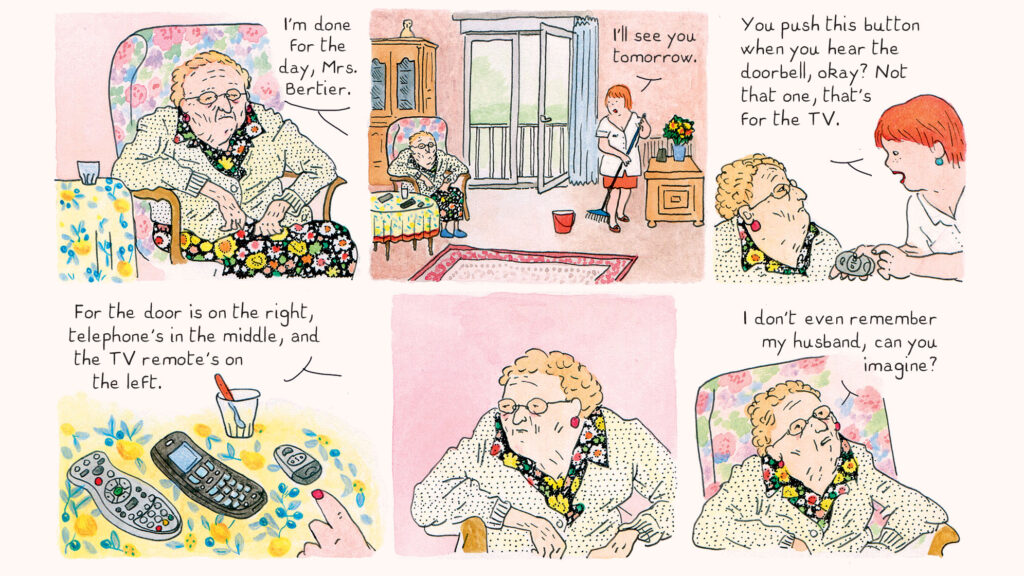
Finally, what should your readers expect from you in the future—and what should they not expect?
I think I will continue to work in a traditional way, on paper and with paint. It’s the method I enjoy most. I’m currently in the process of finishing a long comic that I’ve been working on for quite some time. Once again, it revolves around family relationships and what remains unspoken. I hope to complete it before the summer so that it can be published in the autumn.
After that, I would like to write a continuation of my children’s comic Pépin et Olivia, which follows the everyday life and small mischiefs of two children. Later on, I would also like to work on a second volume of Les Vermeilles, a children’s comic set in an imaginary world.

Follow us on social media.
CZZ WORKS
International independent publication